

Beyond the Bling: Understanding Your Ring's 14K Stamp
Opening Up the Meaning of Your Ring's 14K Stamp
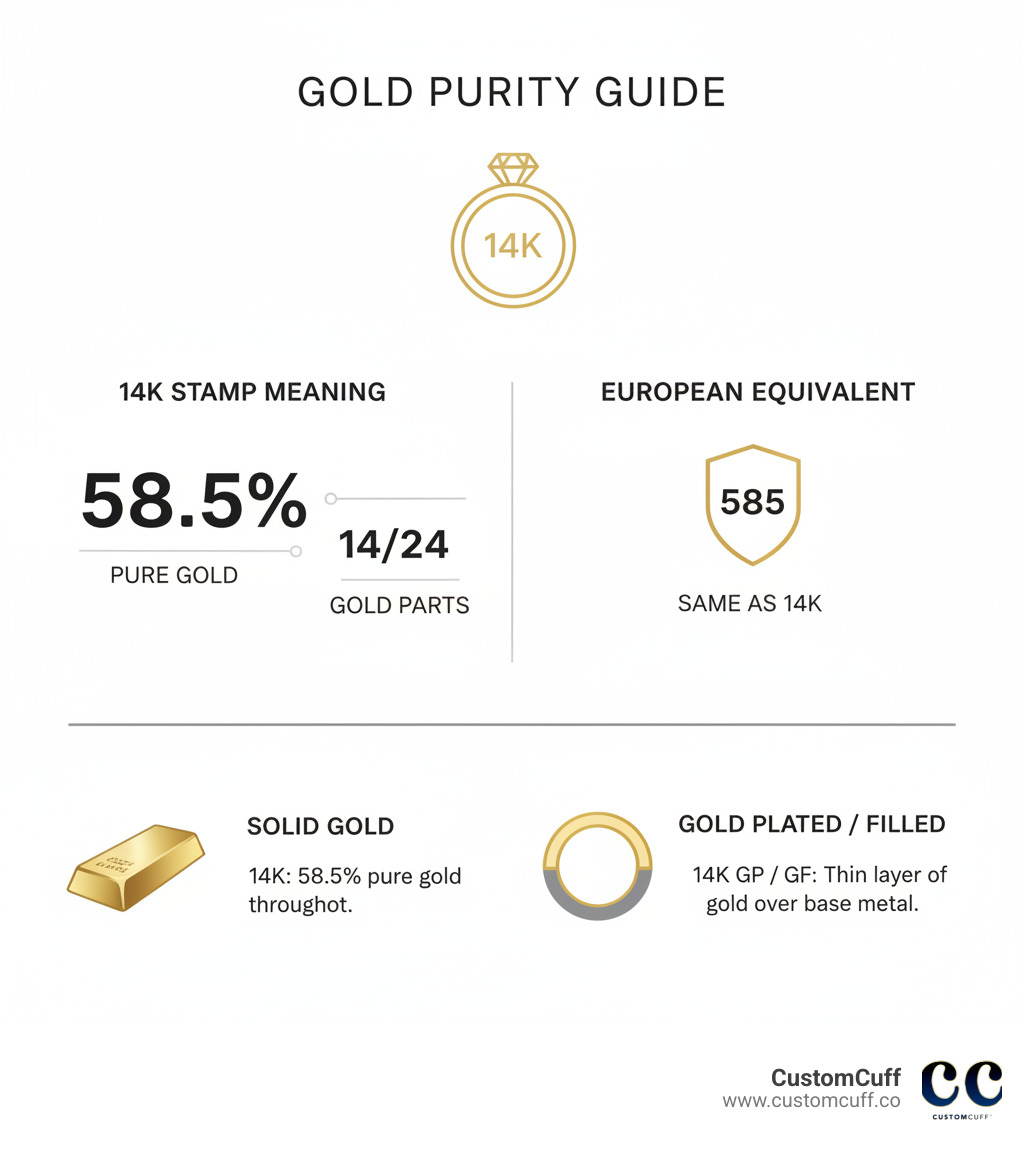
A 14k stamped inside ring means it is made of 14-karat gold. This indicates:
- Gold Purity: The ring contains 58.5% pure gold (14 parts gold out of 24 total parts).
-
European Equivalent: If you see
585, it signifies the same 14K purity under European standards. -
Not Solid Gold: Be cautious of stamps like
14K GP(Gold Plated) or14K GF(Gold Filled), which mean the item is not solid gold, but has a thin layer of gold over a base metal. - Authentication: While a stamp is a strong indicator, professional verification is the most reliable way to confirm authenticity, especially given the rise of counterfeit items.
Have you ever looked closely at the tiny engravings inside your ring? Those small marks, known as hallmarks, might seem like a secret language, but they hold vital clues about your jewelry's authenticity, metal content, and origin. Understanding these markings helps you appreciate your jewelry more deeply, whether it’s a treasured heirloom or a new purchase. This guide will decode the mysteries behind the 14k stamped inside ring and other common markings.
I’m Suchi Jain Saxena, founder of CustomCuff. I’ve spent years helping people understand the sentimental and material value behind their jewelry. My passion is crafting personalized pieces and explaining jewelry markings for our customers, ensuring they cherish their keepsakes for generations.
The Anatomy of a 14K Stamp: Purity and Karats Explained
When you spot a 14k stamped inside ring, you're looking at a crucial clue about its gold content. The "K" stands for karat, the system used to measure gold's purity. Pure gold is 24 karats (99.9% gold), but it's too soft for most everyday jewelry.
That's where alloys come in. A 14k stamped inside ring means your piece is 14 parts pure gold and 10 parts other metals. This works out to 58.3% pure gold, with the remaining 41.7% being a mix of metals like silver, copper, and zinc. These alloys make your ring much stronger, more resistant to scratches, and perfect for daily wear. While higher karat gold like 18K is purer, 14K gold offers a wonderful balance of durability and precious gold content.
Here’s a quick peek at how common gold purities stack up:
| Karat Purity | Pure Gold Content | Common Uses | Durability |
|---|---|---|---|
| 10K | 41.7% | Everyday jewelry, watches | Very Good (most durable) |
| 14K | 58.3% | Engagement rings, fine jewelry | Good |
| 18K | 75% | High-end jewelry, luxury watches | Moderate |
| 24K | 99.9% | Investment, specialty items | Poor (very soft) |
US vs. European Markings: 14K vs. 585
In the US, you'll typically see "14K," but jewelry from Europe often uses a different stamp: "585." This is the millesimal fineness system, which expresses gold purity in parts per thousand. A "585" stamp means the item is 585 parts pure gold out of 1000, or 58.5%—the same as 14K. You might also see "583," an older but still valid mark for 14K gold. Understanding these numbers is helpful when collecting international pieces.
What About Different Gold Colors?
Gold jewelry comes in a dazzling spectrum of shades, all thanks to the alloy metals mixed with pure gold.
- Yellow Gold: The traditional warm glow comes from mixing pure gold with silver and copper.
- White Gold: To get a sleek, silvery appearance, pure gold is blended with "white" metals like palladium or nickel. Most white gold is also plated with rhodium for extra brightness and durability. This plating can wear off over time and may need to be reapplied every few years.
- Rose Gold: This romantic pinkish hue is created by increasing the amount of copper in the gold alloy.
Each gold color offers a unique style and allows for even more personalization. At CustomCuff, we love using different gold colors to craft pieces that truly match your vision. Speaking of personal touches, if you're looking to turn heartfelt sentiments into sparkling gold jewelry, check out our 14k Gold Handwriting Jewelry: Turning Sentiments into Sparkle.
Beyond the Karat: Decoding Other Symbols on Your Ring
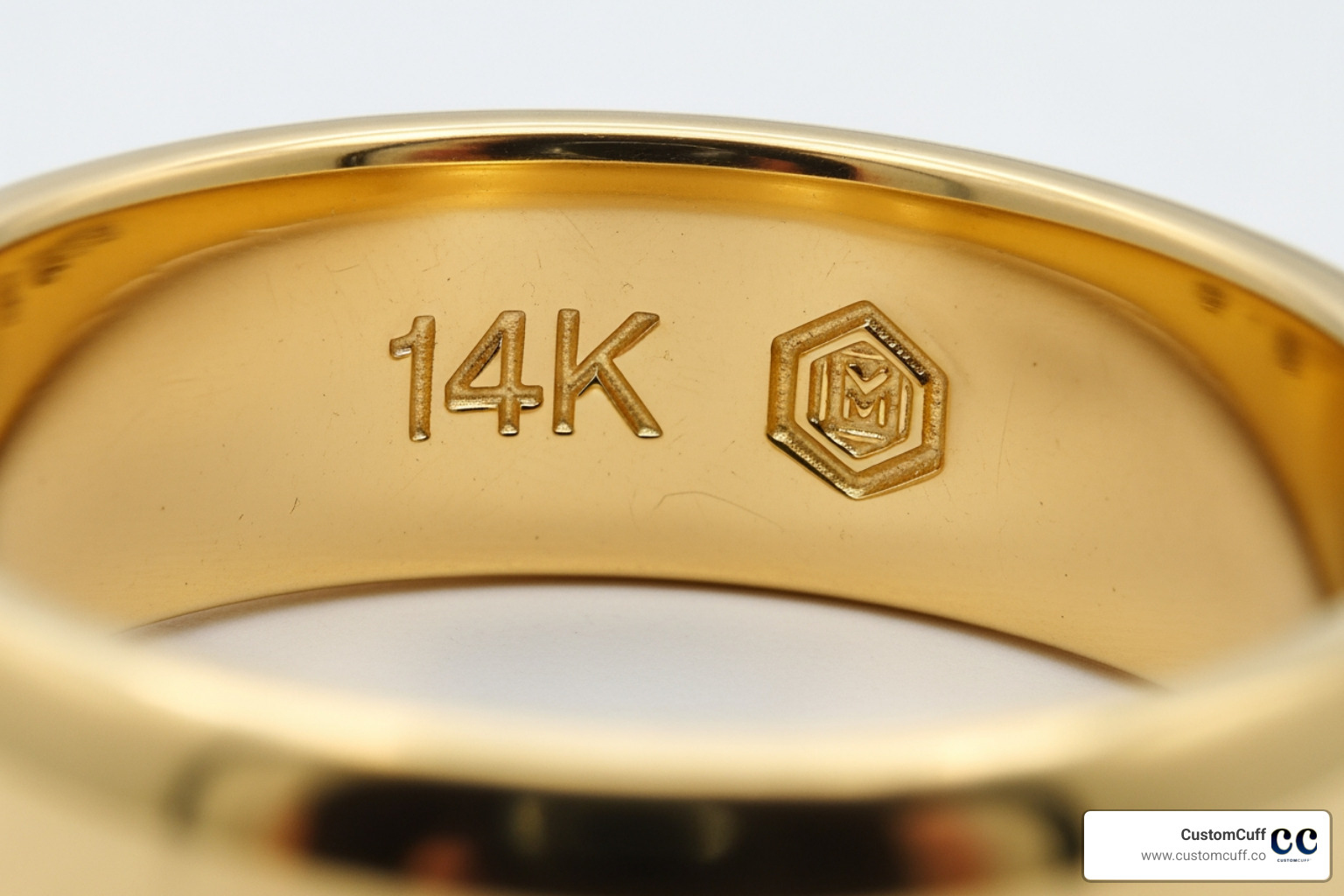
Beyond the 14k stamped inside ring, you might notice other symbols, logos, and letters. These marks are like a jewelry passport, telling you where your ring was made and by whom. While the "14K" or "585" stamp reveals gold purity, these other marks complete the story.
What are Maker's Marks and Date Letters?
The symbol or initials next to the purity stamp is the maker's mark—the jeweler's signature. Every manufacturer or designer has a unique stamp, which could be a logo or initials. A recognizable maker's mark can significantly boost a ring's value and confirms its authenticity.
In some countries, like the UK, you'll also find an assay office mark. This is an official stamp from a government-approved center that verifies the gold purity. Alongside this, a date letter hallmark may be present, which corresponds to the year the ring was certified. These marks help pinpoint when and where your piece was made.
At CustomCuff, we work with customers globally and appreciate these diverse hallmarking traditions. Each region has its own fascinating system for tracing a piece's history.
Gemstone and Patent Stamps
If your ring features gemstones, you may find even more stamps.
- Carat weight stamps indicate the size of a diamond or gemstone. You might see ".55" (0.55 carats) or variations like ".55ct" (carat) or ".55tdw" (total diamond weight for multiple stones).
- A "CZ" stamp means the stone is cubic zirconia, a diamond simulant. This is an honest disclosure about the material.
- A patent stamp indicates a unique, legally protected design feature, such as a special setting or gemstone cut.
All these markings work together, from the 14k stamped inside ring to the maker's mark, to paint a complete portrait of your jewelry's unique story.
Is a 14k Stamped Inside Ring a Guarantee of Solid Gold?
While seeing a 14k stamped inside ring is a good sign, it's not always an iron-clad guarantee of solid gold. Unfortunately, misleading stamps exist, so it's wise to be cautious. Relying solely on a stamp without further verification can sometimes lead to disappointment. Understanding a few more details can make you a savvier jewelry owner.
Gold-Plated vs. Gold-Filled: What the Letters Mean
Not all jewelry that looks gold is solid gold. If your 14k stamped inside ring has additional letters, pay close attention:
- GP (Gold Plated): A very thin layer of gold has been electrically applied over a base metal (like brass). It has minimal gold value and can wear off over time.
- HGE (Heavy Gold Electroplate) or GEP (Gold Electroplate): Similar to GP, indicating a surface coating of gold over a base metal.
- GF (Gold Filled): A much thicker layer of gold bonded to a base metal with heat and pressure. It contains more gold than plated items (often 5% of the total weight). A "1/20 14K GF" stamp means 1/20th of the item's weight is 14K gold. It's more durable than plated jewelry but is not solid gold.
- RGP (Rolled Gold Plate): Similar to gold-filled, but the gold layer is typically thinner.
If you see these letters next to "14K," your jewelry isn't solid 14K gold. This doesn't mean it's not a beautiful piece, but it does affect its material value.
The "P" Stamp: Understanding a 14k Stamped Inside Ring with a 'P'
If you see a 14k stamped inside ring that includes a "P" (e.g., "14KP"), that "P" stands for "plumb," which is a great sign. "Plumb gold" means the gold content is exactly what the stamp says, with no negative tolerance. While a standard "14K" stamp is generally accurate, US law historically allowed a slight variance. A "14KP" stamp guarantees your gold is at least 14 karats, providing an extra layer of assurance about its purity.
How to Verify Your Ring's Authenticity
Even with a 14k stamped inside ring, you might want to be certain it's the real deal. While stamps are a good first clue, a thorough approach is wise for authenticating precious jewelry.
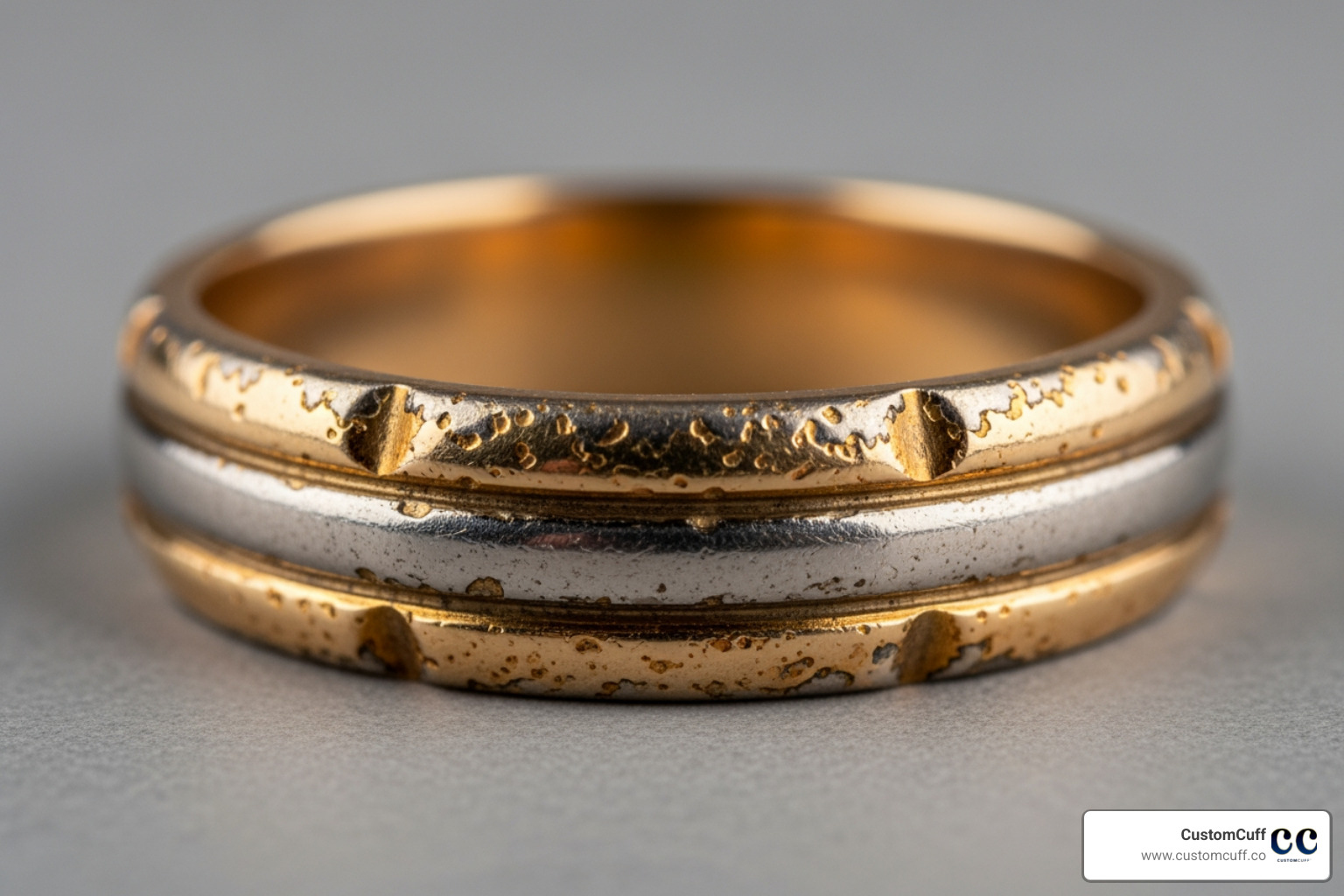
Start with a visual inspection. Look for areas of discoloration, especially on high-wear spots like the edges of the band. On plated pieces, the base metal may start to show through. Solid gold has a consistent color throughout.
The magnet test is another simple check. Gold is not magnetic, so if your ring sticks to a magnet, it's not solid gold. However, many non-gold base metals are also non-magnetic, so this test isn't foolproof. For absolute certainty, a professional appraisal is the gold standard.
Differentiating 14K White Gold from Silver
Telling 14K white gold from sterling silver can be tricky, but there are key differences:
- Color: White gold often has a warmer, creamier undertone, while silver is a brighter, cooler white.
- Tarnish: Sterling silver tarnishes over time, developing a dark film that requires polishing. White gold is highly tarnish-resistant.
- Weight: Gold is denser than silver, so a 14K white gold ring will feel noticeably heavier than a silver ring of the same size.
- Stamps: Silver is typically marked "925," "STERLING," or "STER." A white gold ring will have a "14K" or "585" stamp.
Professional Authentication Methods for a 14k Stamped Inside Ring
For definitive verification, jewelers use several methods:
- Jeweler's Loupe Inspection: A professional uses a 10x magnification loupe to scrutinize stamps, craftsmanship, and wear patterns for signs of forgery.
- Acid Test: This classic method involves scratching the item in a discreet spot and applying nitric acid. The reaction indicates the gold's karat purity. It is a slightly destructive test.
- Electronic Gold Testers: These non-destructive devices measure the metal's electrical conductivity to determine gold purity quickly.
- X-Ray Fluorescence (XRF) Spectrometer: This is the most advanced, non-destructive method. It bombards the ring with X-rays to provide a precise breakdown of its elemental composition and exact karat value.
At CustomCuff, ensuring material authenticity is paramount. These professional methods provide the certainty our customers deserve for their treasured keepsakes.
Frequently Asked Questions about Ring Stamps
Here are answers to some common questions about ring stamps.
How does a 14K stamp affect a ring's value?
A 14k stamped inside ring establishes its intrinsic metal value, or "melt value," based on its 58.3% gold content and current gold prices. However, a ring's total worth is much more than just its metal. Other factors that significantly influence value include:
- Craftsmanship and Design: Intricate, high-quality work is more valuable than a mass-produced piece.
- Designer or Brand: A ring from a famous jeweler or luxury brand often carries a premium.
- Gemstones: The quality, cut, color, clarity, and carat weight of any stones are a major part of the ring's value.
- Condition: A well-preserved ring with minimal wear will be more valuable.
The 14K stamp is a starting point, but these other elements determine the ring's final market value.
Do all real gold rings have a stamp?
No, not all real gold rings have a stamp. While it's standard practice, a genuine gold ring might be unstamped for several reasons:
- It could be an antique or vintage piece made before modern hallmarking laws were common.
- The stamp may have worn off over decades of wear, polishing, or resizing.
- Some handmade or custom pieces may not be stamped, especially if made by a small artisan.
- The item may be too small or delicate to stamp without causing damage.
If you have an unstamped ring that seems like gold, it could still be genuine. In this case, professional testing is the best way to confirm its authenticity. Every piece of jewelry tells a story, stamped or not. If you're curious about how jewelry becomes a lasting memory, check out our guide on Why Keepsake Jewelry Makes the Perfect Gift for Any Occasion.
What if my ring has both a 14K and a 925 stamp?
Finding both "14K" (gold) and "925" (sterling silver) stamps on one ring can be confusing, but it usually indicates one of a few things:
- Mixed Metal Design: The ring is intentionally crafted with separate parts of 14K gold and sterling silver for artistic contrast.
- Vermeil: This is sterling silver plated with a thick layer of gold. The 925 stamp identifies the silver base, and the 14K stamp identifies the gold plating's purity. Vermeil is higher quality than standard plating but is not solid gold.
- Two-Tone Jewelry: The ring's main structure might be silver, with specific decorative elements made of solid 14K gold.
- Counterfeit Marking: In some cases, it could be a misleading mark on a low-quality piece. If in doubt, it's always best to get a professional opinion.
Conclusion
Learning to decipher the markings inside your jewelry, especially a 14k stamped inside ring, is like opening up a secret language. These symbols are vital clues to a piece's purity, origin, and history. We've covered Karat stamps, US vs. European marks, maker's marks, and how to spot the difference between solid gold and plated items.
While a stamp is a helpful guide, it isn't always a guarantee due to the unfortunate existence of fakes and misleading marks. Always buy from jewelers you trust and consult an expert if you have any doubts.
At CustomCuff, we believe every piece of jewelry holds a personal story. Understanding its makeup enriches that narrative. We pour our hearts into crafting unique, personalized jewelry, turning your cherished memories into one-of-a-kind keepsakes that sparkle with meaning.
Ready to add a beautiful chapter to your jewelry story? Let us help you create something truly special. Create a timeless and meaningful engraved ring today with CustomCuff, where exceptional quality meets heartfelt design.