

Unlock the Cosmos: Simple Tips for Stunning Night Sky Images
Why Night Sky Pictures Capture Our Hearts and Imaginations
Night sky pictures are more than just photographs—they're windows to the cosmos that let us capture the wonder of the universe. Whether you're looking for stunning images to inspire your own photography, searching for the perfect celestial backdrop for a special project, or wanting to learn how to take your own breathtaking shots, you've come to the right place.
Quick answer for capturing night sky pictures:
- Use a camera with manual mode (DSLR, mirrorless, or capable smartphone)
- Find a dark location away from city lights (check light pollution maps)
- Start with these settings: Wide aperture (f/2.8 or lower), high ISO (1600-3200), long shutter speed (15-25 seconds)
- Use a tripod for stability and sharp images
- Shoot in RAW format for maximum editing flexibility
The night sky has captivated humans for millennia, and today's technology makes it easier than ever to capture its beauty. With over 610,000 free night sky photos available on platforms like Pexels, there's no shortage of inspiration. But creating your own stunning celestial images is an incredibly rewarding experience that connects you to something much larger than yourself.
The challenge? Light pollution obscures the view of stars and the Milky Way for much of the world's population. The good news is that with the right knowledge, equipment, and location, even beginners can capture breathtaking images of the cosmos. From the sweeping arc of the Milky Way to dramatic meteor showers and colorful auroras, the night sky offers endless photographic opportunities.
I'm Suchi Jain Saxena, founder of CustomisedCuff, where we help people preserve life's most precious moments through personalized jewelry—including custom star maps that capture the exact night sky from meaningful dates. My passion for creating keepsakes that connect people to special memories extends naturally to helping others capture stunning night sky pictures that commemorate their own cosmic moments.

To help you get started, it's useful to know some common terms. You can learn more about identifying constellations in the sky or how to spot specific night sky constellations with our beginner's guides.
Gearing Up for the Galaxy: Essential Equipment
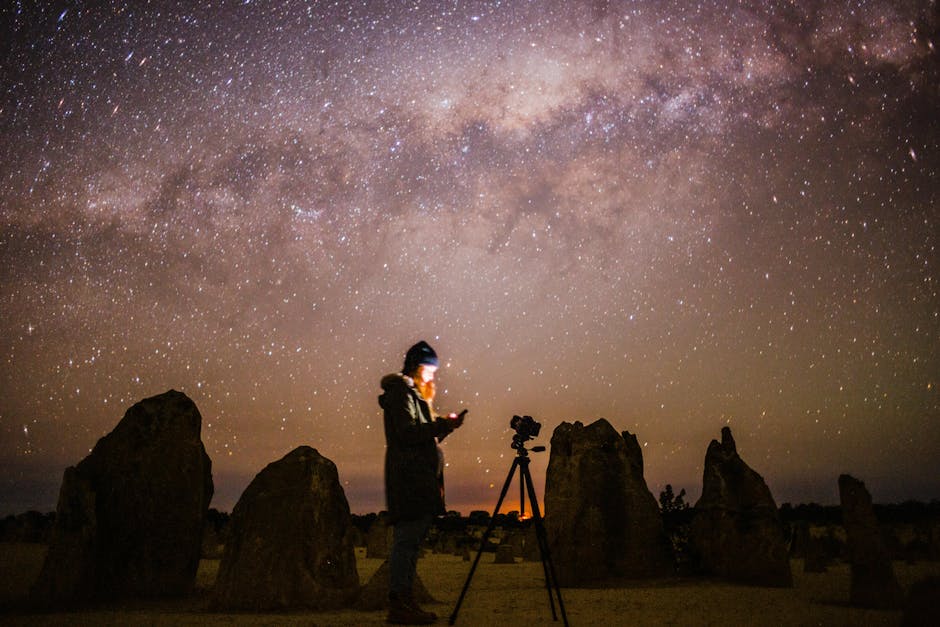
Capturing stunning night sky pictures requires more than just pointing your camera at the stars and hoping for the best. It's about having the right tools and understanding how to use them. Think of it as preparing for a cosmic expedition – you wouldn't go to the moon without the right gear, would you? The essential elements to capture a stunning night sky photo begin with your equipment.
The Right Camera for the Job
The good news is that you don't necessarily need an observatory-grade telescope to start. Many modern cameras are incredibly capable.
- DSLR and Mirrorless Cameras: These are the workhorses of astrophotography. Both Digital Single-Lens Reflex (DSLR) and mirrorless cameras offer manual controls crucial for night sky photography, allowing you to adjust settings like aperture, ISO, and shutter speed. They typically have larger sensors, which are better at gathering light and producing cleaner images in low-light conditions. Their ability to handle long exposures is paramount for capturing faint stars and nebulae.
- Mobile Astrophotography: Technology has truly revolutionized night sky photography, making it accessible to more people than ever before. While professional setups still offer the most detail, advancements in mobile devices, coupled with sophisticated editing software, mean your smartphone can now capture impressive night sky pictures. For instance, a mobile device photo, "Milky Way Over Quiver Tree," even won second place in the Mobile Astrophotography category of DarkSky International’s "Capture the Dark 2023" photo contest. Many newer smartphones have "Night Mode" or dedicated "Pro" modes that allow for longer exposures and manual control, making them a fantastic starting point for amateur photographers in locations like New York, California, or even the vast landscapes of Australia and New Zealand.
Lenses: Your Window to the Stars
Your lens is arguably as important as your camera body when it comes to night sky pictures.
- Wide-angle Lens: For sweeping vistas of the Milky Way or broad star fields, a wide-angle lens (typically 14mm to 24mm on a full-frame camera) is ideal. It allows you to capture a larger portion of the sky and often incorporates interesting foreground elements.
- Fast Aperture: This is critical. A "fast" lens has a wide maximum aperture, indicated by a small f-number (e.g., f/2.8, f/1.8, f/1.4). The wider the aperture, the more light your lens can gather in a given amount of time, which is essential for capturing faint celestial objects. We recommend an aperture of f/2.8 or lower if possible.
- Focal Length: While wide-angle lenses are great for broad scenes, a slightly longer focal length (e.g., 35mm or 50mm) can be used for more detailed shots of specific constellations or galactic regions, provided you compensate with shorter shutter speeds to avoid star trailing.
Stability is Key
When you're dealing with long exposures, even the slightest movement can ruin your night sky pictures.
- Sturdy Tripod: This is non-negotiable. A stable tripod will keep your camera perfectly still during those crucial long exposures, ensuring sharp stars and clear images. We've found that investing in a good quality tripod pays dividends in the long run.
- Remote Shutter Release or In-Camera Timer: To completely eliminate camera shake caused by pressing the shutter button, use a remote shutter release (wired or wireless) or your camera's built-in 2-second timer. This simple step can make a huge difference in the sharpness of your final image.
Dialing in the Cosmos: Camera Settings for Beginners
Once you have your gear ready, it's time to talk settings. Don't be intimidated; mastering these few manual controls will open up your camera's potential for incredible night sky pictures. This is how amateur photographers can truly get started.
The Exposure Triangle for Night Sky Pictures
The exposure triangle – aperture, shutter speed, and ISO – is your best friend in night sky photography. Our infographic in the introduction provides a great starting point.
- Aperture: As we discussed, a wide-open aperture (small f-number like f/2.8 or lower) is crucial to let in as much light as possible.
- Shutter Speed: This determines how long your camera's sensor is exposed to light. For capturing stars as pinpoints of light, you'll need a relatively long shutter speed, but not too long, or the Earth's rotation will cause stars to "trail." The 500 Rule is a popular guideline: divide 500 by your lens's focal length (e.g., 500 / 20mm = 25 seconds). This gives you the maximum shutter speed before star trails become noticeable. So, for a 20mm lens, a 20-25 second exposure is a good starting point.
- ISO Settings: ISO controls your camera's sensitivity to light. For night sky photography, you'll generally need a high ISO (e.g., 1600, 3200, or even 6400) to brighten the faint stars. However, higher ISOs introduce more digital "noise" (graininess). The trick is to find a balance between gathering enough light and keeping noise to an acceptable level. Our recommended starting point is ISO 1600-3200, which you can adjust based on your camera's performance and the darkness of your sky.
Nailing the Focus in the Dark
Autofocus systems often struggle in low light, so manual focus is essential for sharp night sky pictures.
- Manual Focus: Switch your lens to manual focus (MF).
- Infinity Focus: Some lenses have an infinity symbol (∞) on the focus ring. While this is a good starting point, it's often not precisely true infinity.
- Live View Zoom: The most reliable method is to use your camera's "Live View" mode and zoom in digitally (10x or more) on a bright star. Adjust the focus ring until the star appears as a tiny, sharp pinpoint of light.
- Focusing on a Bright Star or Planet: If you can't find a bright star, sometimes focusing on a distant city light (if available) can get you close, then fine-tune with a star.
Why You Should Always Shoot in RAW
When capturing night sky pictures, always shoot in RAW format if your camera allows it.
- Post-Processing Flexibility: RAW files contain all the uncompressed data captured by your camera's sensor. This gives you immense flexibility during post-processing to adjust exposure, white balance, shadows, and highlights without losing image quality.
- Capturing More Data: Unlike JPEG files, which are compressed and lose information, RAW files retain a wider dynamic range. This is critical for bringing out faint details in the Milky Way or recovering details in a slightly underexposed sky.
- White Balance Correction: Getting the white balance perfect in-camera at night can be tricky. Shooting in RAW allows you to precisely adjust the white balance later to achieve natural-looking colors or creative effects.
- Recovering Details: We've often found that RAW files allow us to recover details in highlights (like bright stars) and shadows (like foreground elements) that would be impossible with a JPEG.
Chasing Celestial Wonders: What to Capture in Your Night Sky Pictures
The cosmos offers a breathtaking array of phenomena to capture. From the familiar glow of our own galaxy to the ephemeral dance of meteors, there's always something spectacular waiting to be immortalized in your night sky pictures. What are some of the most iconic or breathtaking night sky phenomena that photographers aim to capture? Let's explore.
The Majestic Milky Way
Our own galaxy, the Milky Way, is arguably the most sought-after subject for night sky photographers.
- Galactic Center: The brightest and most concentrated region of the Milky Way, often appearing as a luminous cloud, is the galactic center. From our vantage point, it's located in the direction of the constellations Sagittarius, Ophiuchus, and Scorpius. The southern hemisphere, including locations like Australia, New Zealand, and Brazil, offers superior views of the Milky Way's galactic center due to Earth's orientation.
- Best Viewing Seasons: The Milky Way's galactic core is best viewed during specific months, typically from late spring to early autumn in the northern hemisphere (e.g., USA, Canada, UK, Europe) and late autumn to early spring in the southern hemisphere (e.g., Australia, New Zealand, Brazil). The Milky Way galaxy is visible to the naked eye in areas with low light pollution.
- Composition with Foreground Elements: To make your Milky Way night sky pictures truly stand out, incorporate interesting foreground elements like mountains, trees, ancient ruins, or even a person. This adds scale, depth, and a sense of place to your cosmic landscape.
- Using Star-Finder Apps: Apps like PhotoPills or Stellarium can help you plan your shots by showing you where the Milky Way will be at a specific time and location. For finding specific stars or constellations, our guide on Starry Night Survival Guide: Spotting Night Sky Constellations can be a great resource.
Meteor Showers and Auroras
These fleeting celestial events offer incredible opportunities for unique night sky pictures.
- Meteor Showers: These occur when Earth passes through debris trails left by comets. Major annual meteor showers like the Perseids (August) and Geminids (December) can produce dozens of "shooting stars" per hour. Capturing them requires patience and a wide-angle lens, often with continuous shooting.
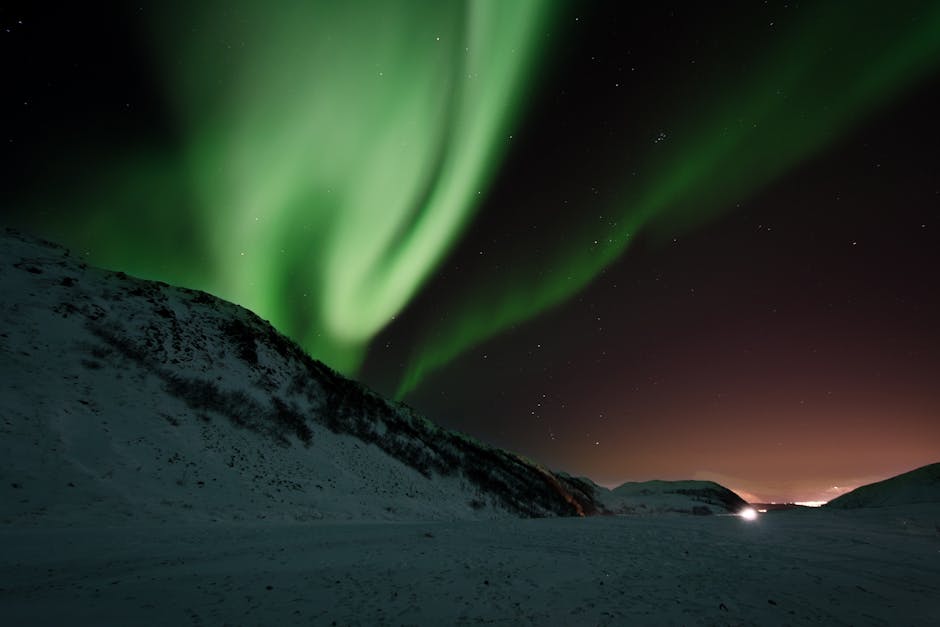
- Aurora Prediction: The Northern Lights (Aurora Borealis) and Southern Lights (Aurora Australis) are caused by solar particles interacting with Earth's magnetic field. They are often visible in high-latitude regions, such as Canada, parts of the UK and Northern Europe, and for the Southern Lights, New Zealand and Australia. Websites and apps that track solar activity and geomagnetic storms can help predict when and where auroras might appear.
- Capturing Fleeting Moments: Both meteor showers and auroras are dynamic. For meteors, a wide-angle lens and continuous shooting will increase your chances. For auroras, slightly shorter exposures (5-15 seconds) are often better to capture the movement and detail in the light curtains.
Creating Mesmerizing Star Trails
Star trails are a classic form of night sky photography, showcasing Earth's rotation as the stars appear to move across the sky.
- Single Long Exposure Technique: This involves a very long exposure (30 minutes to several hours). While simpler, it can introduce more digital noise and condensation on your lens.
- Image Stacking Method: We prefer the image stacking method. This involves taking many shorter exposures (e.g., 30-second exposures) consecutively and then combining them in software. This method results in cleaner images with less noise and allows for more control over the final star trail effect. Software like StarStax can easily merge these images into stunning star trails.
The Photographer's Nemesis: Overcoming Light Pollution
Light pollution is the bane of every night sky photographer's existence. It's the artificial light from cities and towns that scatters into the atmosphere, brightening the night sky and obscuring our view of the stars. It's a significant issue, obscuring the view of stars and the Milky Way for a large portion of the world's population, including many of our customers in New York, London, or busy European cities. But what role does it play in night sky photography, and what can be done about it?
Understanding and Escaping City Glow
- What is Light Pollution: Light pollution is essentially wasted light that brightens the sky, making it harder to see celestial objects. As our research shows, areas with yellow or brighter coloring on light pollution maps have more brightness coming from the ground than the natural sky, highlighting its severity particularly in Europe, Asia, and the Americas (which includes the USA, Canada, Mexico, and Brazil).
- Impact on Photography: Light pollution drastically reduces the contrast between stars and the sky, making faint objects like nebulae and the Milky Way much harder to capture. It also introduces an orange or yellow cast to your night sky pictures, requiring more effort in post-processing.
- Using Light Pollution Maps: Thankfully, there are tools to help us escape. Websites like LightPollutionMap.info or DarkSiteFinder.com use data, often represented by the Bortle Scale, to show you the darkest skies near you. The Bortle scale is a metric that provides observers with a way to measure the darkness and clarity of the sky overhead, ranging from 1 (pristine dark sky) to 9 (inner-city sky). We highly recommend checking these maps before planning your night photography trip.
- International Dark Sky Places: Organizations like DarkSky International certify locations with exceptionally dark skies as "International Dark Sky Places." These protected areas, found across the USA, Canada, Europe, and Australia, are prime locations for capturing breathtaking night sky pictures. You can find more information and locations on the National Park Service website.
Tips for Composing Breathtaking Night Sky Pictures
Even in dark skies, composition is key to changing a snapshot into a work of art. The essential elements to capture a stunning night sky photo aren't just technical; they're artistic too.
- Foreground Interest: Don't just shoot the sky! Including a compelling foreground element—a unique tree, a mountain range, a body of water, or an interesting structure—adds depth, context, and scale to your night sky pictures. It gives the viewer something to connect with in the scene.
- Leading Lines: Use natural or artificial lines in your foreground (a path, a fence, a river) to draw the viewer's eye towards the celestial subject, like the Milky Way.
- Silhouettes: The dark conditions of night photography lend themselves perfectly to dramatic silhouettes. Position your foreground subject against the bright night sky to create a powerful shape that contrasts with the stars.
- Rule of Thirds in the Dark: Apply the classic rule of thirds by placing your main celestial or foreground subjects along the intersecting lines or at their intersections. This creates a balanced and visually appealing composition, even when working with the vastness of the night sky.
From Pixels to Perfection: Bringing Your Photos to Life
Capturing the raw data in your camera is only half the battle. The real magic often happens in post-processing, where you can transform your RAW files into vibrant, detailed night sky pictures. This is another area where technology, specifically editing software, has profoundly changed night sky photography.
Essential Post-Processing Steps
Modern editing software allows us to refine and improve our night sky captures.
- Editing Software: Programs like Adobe Lightroom and Photoshop are industry standards, offering powerful tools for astrophotography. For stacking multiple images (e.g., for star trails or noise reduction), dedicated stacking software like StarStax or Sequator can be invaluable.
- Adjusting Exposure and Contrast: Your RAW file might look a bit flat straight out of the camera. We typically start by adjusting the overall exposure and increasing the contrast to make the bright stars pop and the dark sky recede.
- Correcting White Balance: As mentioned earlier, white balance can be tricky at night. In post-processing, you can fine-tune the color temperature and tint to achieve a natural-looking sky or a more artistic, cool blue tone, depending on your vision.
- Light Pollution Removal: Some software includes tools or plugins specifically designed to reduce light pollution glow, which can be a lifesaver even when shooting in relatively dark skies.
Enhancing the Details
Once the basic adjustments are made, we move on to bringing out the subtle details in our night sky pictures.
- Clarity and Dehaze Sliders: In programs like Lightroom, the "Clarity" slider can add punch to the stars, while the "Dehaze" slider can help cut through any lingering atmospheric haze, making the Milky Way appear crisper.
- Noise Reduction Techniques: High ISO settings inevitably introduce noise. We apply noise reduction (both luminance and color noise) carefully to smooth out the image without losing important star detail. Many software options offer advanced noise reduction algorithms that work wonders.
- Sharpening Stars: A subtle amount of sharpening can make your stars appear more defined. Be careful not to overdo it, as this can introduce artifacts.
- Dodging and Burning: These traditional darkroom techniques, now digital, allow you to selectively lighten (dodge) or darken (burn) areas of your image. We might use this to subtly improve the brightness of the Milky Way core or deepen the shadows in a foreground element.
Conclusion
The journey into night sky photography is one of endless findy and immense satisfaction. What makes night sky pictures so captivating? It’s the profound sense of awe and wonder they evoke, reminding us of our place in the vast cosmos. Each click of the shutter is an attempt to capture a moment of universal grandeur, a connection to something ancient and infinite.
The challenges are real—battling light pollution, mastering complex camera settings, enduring cold nights—but the rewards are immeasurable. There's a unique thrill in seeing the faint glow of the Milky Way emerge on your camera screen, or capturing the fleeting streak of a meteor. It’s a hobby that fosters patience, technical skill, and a deep appreciation for the natural world.
Beyond the technical aspects, creating night sky pictures has a profound artistic and emotional impact. These images aren't just data; they're emotional snapshots of moments under a celestial canopy. They can be serene, dramatic, inspiring, or even melancholic, reflecting the vast spectrum of human emotion. Each photograph becomes a personal memory, a testament to the beauty that exists beyond our everyday lives.
For us at CustomisedCuff, this connection to the night sky is at the heart of what we do. We believe in preserving special moments, changing them into tangible keepsakes. Just as a photograph captures the night sky from a specific point in time, our custom star maps immortalize the constellations as they appeared on your most cherished dates – be it a first kiss in New York, a wedding in Europe, or the birth of a child in Australia. These personalized pieces are more than jewelry; they are modern heirlooms, designed to last generations, much like the stars themselves.
So, where can people find inspiration and resources for night sky photography? Beyond the technical guides and online communities, look to the images themselves. Explore the stunning collections on platforms like Pexels and Unsplash, dig into the award-winning photos from contests like DarkSky International’s "Capture the Dark," or simply step outside on a clear night and let the universe inspire you.
As you continue your journey, each night sky picture you take is a piece of your own story, intertwined with the cosmic narrative. We invite you to explore The Ultimate Guide to Custom Star Map Necklaces to see how we help capture these unique moments forever. And for more inspiration on how we turn memories into beautiful, lasting pieces, Explore our custom jewelry creations. Happy stargazing and happy shooting!